









You may already have the idea, prototype, patent, technical solution or proof of concept. What you may not yet have is the commercial pathway that shows who will buy it, why they will act, what the deal could look like, and what needs to happen next to create income from your invention.
The Inventors Academy helps you turn your intellectual property into a commercially-ready opportunity, using a structured six-step process, live coaching, practical tools and a clear pathway toward your first or next cash-generating transaction.


When you are deciding whether to invest more time, money and energy into your invention, you need more than encouragement. You need commercial judgment, structure, evidence, accountability, and a process that helps you make better decisions before you spend the next dollar.
Inventors Academy draws on decades of practical IP commercialisation experience across inventors, founders, universities, R&D teams, corporate innovation programs, and international commercial pathways.
Every invention is at a different stage. Some inventors need to get their first project commercially ready. Some have already made progress and want to help others. Some organisations need a repeatable process to identify, capture, and monetise the ideas sitting inside their teams.
Inventors Academy is structured in three levels so you can enter at the point that matches your situation.
Level 1 is designed for inventors, founders and small R&D teams who are ready to stop guessing and start building a commercially credible pathway.
You will work through the six steps of commercialisation, complete a half-day custom commercial modelling session, identify the most practical route to market, and begin working toward your first or next cash-generating transaction.
This may include funding, licensing, distribution, partnering, a strategic collaboration or a trade-sale pathway.
Level 2 is for Level 1 graduates who have applied the process, achieved progress with their own project, and want to develop the skills to support other inventors.
Many inventors need practical help with research, outreach, commercial modelling, pitch preparation, documentation and project support.
Level 2 helps suitable graduates become part of a professional support pathway for inventors who need trusted implementation help.
Level 3 is designed for companies, universities, R&D groups and innovation teams that may already have unexplored intellectual property inside the organisation.
The program helps your team identify, assess, own, protect, nurture and commercialise internal IP opportunities so they are not lost, ignored, underfunded or left sitting in technical reports. The aim is to build a repeatable internal process for turning innovation into commercial value.
Most inventors do not fail because their ideas are bad. They fail because the commercial pathway is unclear. They do not know which market to approach first. They do not know what kind of deal to pursue. They often spend too much money too early, protect the wrong things, speak to the wrong people, or pitch the product before the commercial model is ready.
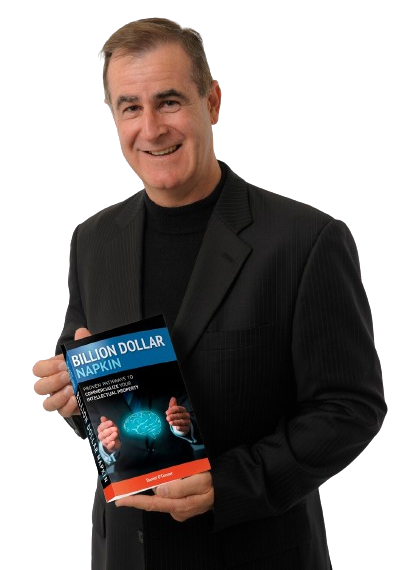
Daniel J. O’Connor created Inventors Academy to give inventors and IP owners a more practical route.
After decades working with inventors, founders, R&D teams, commercial partners and corporate innovation groups, Daniel has seen the same problem repeat itself: people fall in love with the invention, but the market only responds when the commercial value is clear.
Inventors Academy exists to help you build that clarity.
It gives you a structured process, commercial modelling, tools, templates, live coaching and the discipline to move your project from idea, prototype or technical solution toward a real commercial opportunity.
Before you spend more money on patents, prototypes, marketing, websites, tooling, production or investor pitches, it makes sense to understand where your invention really stands. The IP Commercial-Readiness Quiz helps you identify the strengths, gaps, and risks in your project before you commit further resources. You will receive a personalised report that helps you think more clearly about your next commercial step.
Complete the free IP Commercial-Readiness Quiz and receive your personalised report before you spend more money on the wrong next step.
If you are like most inventors, you may already have invested time, money, emotion and energy into your idea. You may have a prototype, patent application, drawings, early market interest, technical validation or even a product that works. But the real question is not simply, “Does it work?” The more important commercial questions are:
Level 1 is designed to help you answer these questions and turn your project into a practical commercial plan. You begin with a structured learning pathway covering the six steps of commercialisation. This gives you the foundation to understand how IP projects move from idea to income, including assessment, ownership, protection, commercial modelling, partner strategy, pitching and implementation. You then complete an Ideation and Commercial Modelling Workshop, where your invention is mapped against the market, potential buyers, industry pathways, risks, deal options and immediate priorities. From this workshop, you receive a practical action plan so you know what to do, in what order, and why it matters.
You are then supported through weekly live group coaching, accountability, project review, templates, checklists and implementation guidance so you are not trying to work it out alone. The aim is not simply to teach you about commercialisation. The aim is to help you move toward your first or next meaningful transaction. That transaction may be a licensing approach, distribution pathway, collaboration, strategic partnership, funding arrangement, pilot program, commercial trial, or trade-sale conversation.
If your invention solves a real problem, creates measurable value, and has a potential pathway to market, Level 1 can help you test whether it is commercially ready enough to move forward.
Some inventors complete Level 1 and realise they have developed skills that other inventors badly need. They understand the pressure, confusion and isolation of trying to commercialise an invention. They also understand the value of structure, research, documentation, outreach, modelling and disciplined implementation.
Level 2 is for successful Level 1 graduates who want to become IP Mentors and provide practical support to inventors, founders and IP owners. Many inventors do not have the time, confidence, experience or resources to complete every task themselves.
They may need help preparing documents, researching markets, building contact lists, reviewing pathways, preparing pitch materials, organising project information or progressing specific commercialisation tasks. Through Level 2, suitable graduates can develop the capability to provide this support as part of a professional pathway.
The goal is to create a trusted support network for inventors who need practical help, while giving capable graduates a pathway to apply their commercialisation knowledge in a meaningful way.
Many organisations already have valuable intellectual property inside the business. It may be sitting in project files, engineering solutions, research outcomes, operational improvements, technical know-how, staff inventions, process innovations or client-specific problem solving.
The problem is that most organisations do not have a simple, repeatable process to identify these opportunities, assess them, capture ownership, reward contributors and move the best ideas toward commercial outcomes.
Level 3 helps organisations build that process. It is designed for companies, R&D teams, innovation managers, universities, technical organisations and corporate leaders who want to turn internal innovation into commercial value.
The program helps your organisation identify opportunities, assess suitability, clarify ownership, protect the right assets, build commercial pathways and create a repeatable system for monetising intellectual property.
The Six Internal IP Commercialisation Steps
The outcome is a more disciplined approach to internal innovation, so valuable ideas are not lost, ignored or left undeveloped.
My Level 1 Program gave me structure and a clear pathway and allowed me to focus on the one main thing, so I could generate the funds to do more. The added benefit is the sense of community from my cohort and the effectiveness of the reach-out calls from the Academy team.
After completing Level 1 in 2012, I delved into business consulting for 12 years. During COVID in 2020, I seized the opportunity to complete Level 2. Now, as a freelance IP Mentor, I offer tailored services for inventors, including 10-hour blocks of dedicated support and facilitating group coaching meetings and workshops on IP and funding strategies.

The Inventors Academy Level 3 gave us the clarity and process to identify, qualify, patent, and monetize intellectual property opportunities in our Group and build a separate revenue stream from our own, in-house expertise.

I had a great, professional and productive experience with Daniel J. O’Connor! He provided exceptional and immediate insight and gave me new, fresh and vital perspectives which, I believe, will effectively advance the adaption of my invention. I will continue my relationship with Daniel, and I thank him very much!
Real Projects. Real Commercial Problems. Real Pathways.
Every invention has a different starting point. Some need seed capital. Some need a first distributor. Some need a licensing strategy. Some need a sharper niche. Some need to protect the commercial value of work already done. These examples show how different inventors, founders and IP owners used commercial modelling, market focus and strategic pathways to move from uncertainty toward real commercial outcomes.
Arron French needed seed capital to produce tooling and samples for a plastic injection moulded product. With a clearer commercial pathway, funding strategy and distributor focus, the project moved toward a major hardware opportunity in the United States.
Justin Massion had hundreds of possible applications for his 3D menu system. The commercial breakthrough came from narrowing the opportunity to one product, one application and one industry, making the project easier for a commercial partner to understand and act on.
Dr Rajen Manicavisicar had strong product ideas but needed market channels. By focusing on distribution, he secured a national agreement with a major pharmacy chain in China and later expanded into other countries and product opportunities.
Simon Frayne needed a breakthrough in his consulting practice. By focusing on a clearer niche, a more defined program and stronger positioning, he turned broad expertise into a more marketable consulting offer.
Bassam Matty designed an engineering solution that enabled a builder to deliver a shopping mall extension 32% cheaper and five months ahead of schedule. The solution saved the client nearly $40 million, but the larger opportunity was learning how to retain and commercialise the intellectual property created through that work.
John Bowey was concerned that one product may not create enough commercial value into the market he was targeting. By speaking with the same customers who already had the problem he was solving, he identified related problems and expanded his thinking into a broader product range.